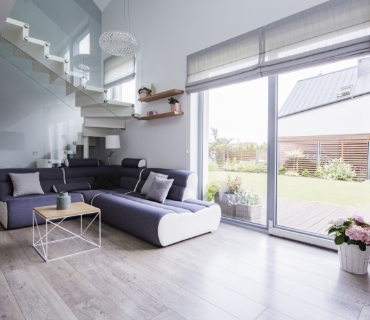
New York City is energetic and loud. Taxis, sirens, subway rattle, and late-night chatter all leak through windows and bounce off hard surfaces. If you want a calmer home, the two most common upgrades are soundproof curtains and acoustic blinds. This guide gives you a decisive comparison of NYC conditions, then shows how to build a layered setup that actually works.
Acoustic blinds block more outdoor noise at the window, while soundproof curtains absorb echo and mid-range sound inside the room. In NYC, the best results come from a layered system that combines tight-fitting blinds with full-length acoustic curtains and smart controls.
How Sound Travels in NYC Homes
City sound reaches the interiors by two paths. First is transmission through the glazing, frames, and gaps. Second is reflection and reverberation once the sound is already indoors. High-rise glass can carry vibration. Pre-war frames can leak air. Bare walls and floors reflect sound. Your plan should treat both the entry point and the interior.
What Soundproof Curtains Do Well
Soundproof curtains, also called acoustic drapes, use dense multi-layer fabrics that absorb sound energy. They do not seal a window. They reduce echo, speech clarity, and mid-to-high frequencies in the room. The effect is a quieter feel, even when some outside noise remains.
- Noise effect: Typical absorption improvement is about 20 to 40 percent, depending on fabric weight, pleat depth, and coverage.
- Coverage tips: Mount from ceiling to floor and extend past each jamb to close side gaps.
- Thermal bonus: Thick linings add comfort and reduce drafts.
- Best rooms: Bedrooms, studios, and living rooms with hard finishes.
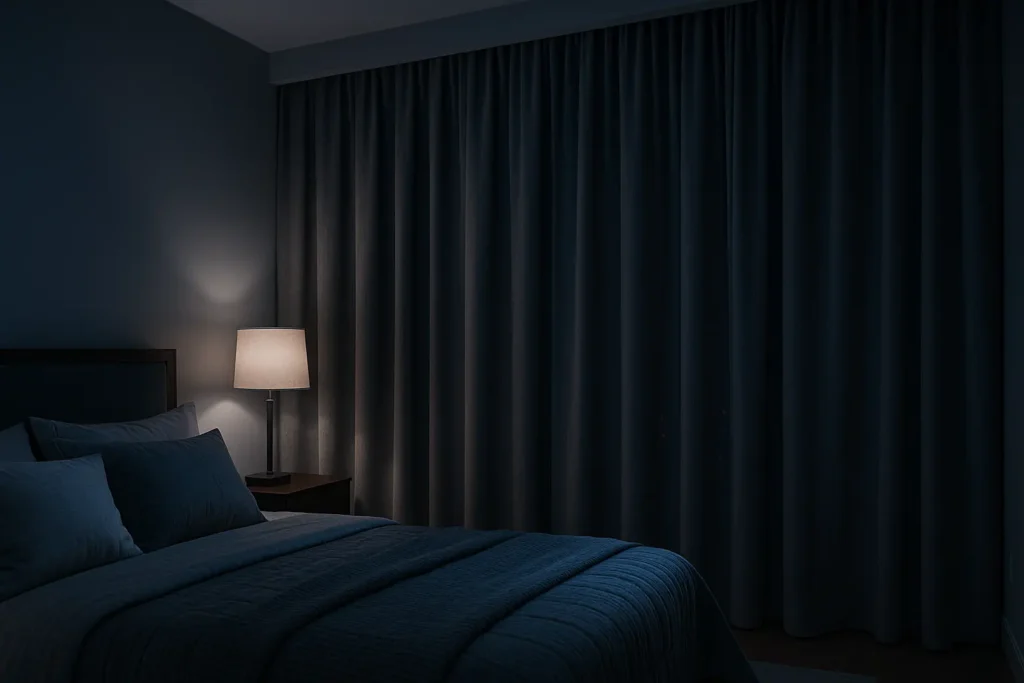
For hands-free control and daily consistency, add motorized curtains. If you prefer a tailored look, explore custom curtains with acoustic linings that match your interior style.
What Acoustic Blinds Do Well
Acoustic blinds use tight fits and air pockets to resist sound at the window plane. Cellular and honeycomb structures trap air. Proper side channels reduce leakage. The result is a stronger reduction of outside noise before it enters the room.
- Noise effect: Reduction is often in the 30 to 45 percent range when fit is tight and fabric density is high.
- Best types: cellular or honeycomb shades and well-fitted roller shades with side channels.
- Thermal bonus: Air pockets improve winter warmth and summer cooling.
- Look and feel: Clean, modern, minimal profiles suit NYC apartments and lofts.
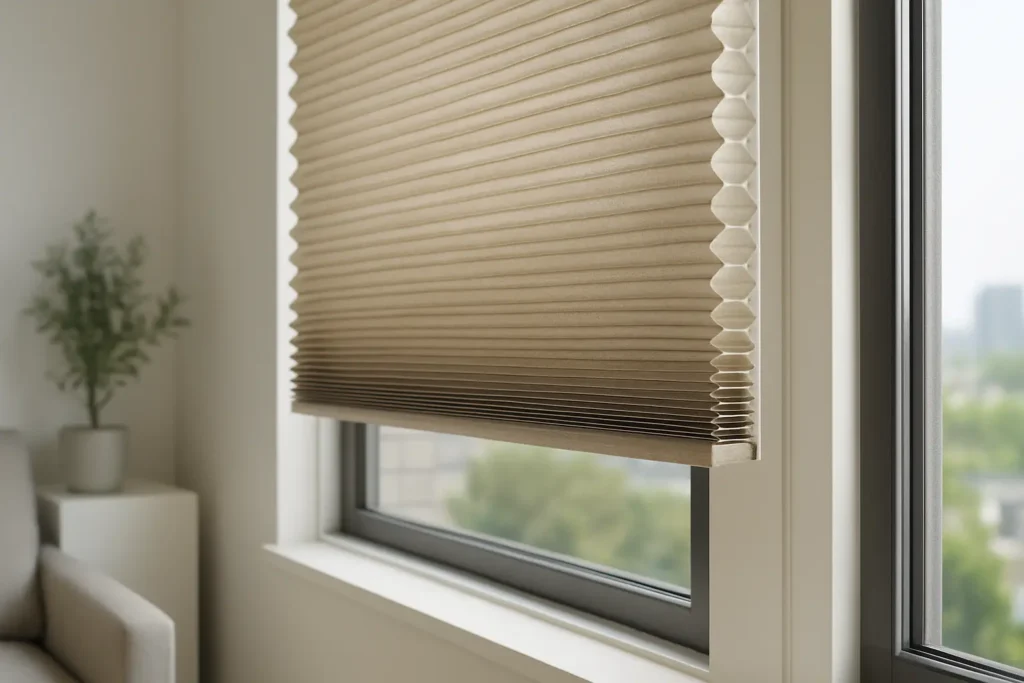
For quiet operation and scheduling, add automation with motorized blinds. If early sunrise or street lighting is a problem, pair with blackout shades to control light and reduce glare.
Head-to-Head Comparison
| Feature | Soundproof Curtains | Acoustic Blinds |
|---|---|---|
| Primary function | Absorbs indoor echo and mid-range sound | Blocks and diffuses sound at the window |
| Typical effect | About 20 to 40 percent perceived reduction | About 30 to 45 percent reduction with tight fit |
| Light control | Excellent with blackout linings | Excellent with blackout fabrics and side channels |
| Thermal comfort | Good insulation from thick fabrics | Very good insulation from air pockets |
| Look and style | Soft, layered, designer feel | Minimal, modern, compact |
| Automation | Motorized curtain tracks | Motorized blinds or motorized shades |
| Best NYC use case | Bedrooms and echo-prone rooms | Street-facing windows and glass-heavy rooms |
NYC Scenarios and What Works Best
High-rise on a busy avenue
Traffic and horn noise are dominant. Start with tight-fitting honeycomb shades or channeled roller shades to block transmission. Add full-length custom acoustic curtains to absorb what gets through. Use motorized shades to close at peak traffic and reopen during quieter hours.
Pre-war brownstone in Brooklyn
Drafty frames and reflective plaster raise noise and echo. Seal gaps, then use roman blinds or wooden blinds for structure. Add lined pinch pleat drapes or sheer drapes plus an inner blackout layer for sleep.
Glass-heavy loft or corner unit
Large glazing equals glare and vibration. Use solar shades by day for glare control and views. Add evening blackout shades for light and sound comfort. Finish with full-height curtains to dampen the echo.
The Layered System That Wins in NYC
- Seal and fit the window plane. Choose tight cellular, roller, or zebra blinds that minimize side leakage.
- Add full-length acoustic curtains. Mount from the ceiling to the floor and widen the rod past the window to cover gaps. Consider thermal curtains for extra insulation.
- Automate for consistency. Set motorized curtains and motorized blinds to close during peak noise periods.
- Tune for sleep. Pair blackout shades with lined curtains for bedroom darkness and quiet.
Need a custom plan for an odd window, skylight, or bay? Our team designs custom shades and custom curtains that solve unique NYC conditions.
Cost and Value Overview
- Soundproof curtains: Often the fastest and most affordable improvement.
- Acoustic blinds: Higher performance at the window with better insulation.
- Layered system: Highest comfort and best overall reduction with the strongest return in sleep quality and daily calm.
Professional Design and Installation
Results depend on fit, fabric density, and coverage. Poor side seals or short curtains leave sound paths open. Professional Shades designs and installs NYC-ready systems that combine blinds, shades, and curtains to match your room, exposure, and building rules.
Summary
Acoustic blinds reduce more outdoor noise at the window. Soundproof curtains like smart curtain system reduce echo and make rooms feel calmer. In NYC, the clear winner is a layered system that uses tight blinds, full-length acoustic curtains, and automation. You get quieter days, darker nights, and better comfort year-round.
Frequently Asked Questions
Do soundproof curtains really block NYC street noise?
Yes, they can help reduce the noise you hear inside by absorbing sound waves, but they don’t block all the noise coming through the window. They work best when combined with shades or blinds that seal the window tightly.
Are acoustic blinds better than curtains for reducing noise?
Acoustic blinds usually block more outside noise because they fit closely to the window and trap sound. Curtains work more on the inside of the room by absorbing remaining noise and echo.
What’s the best option if my window faces a busy street or subway line?
The best setup is a combination: first use acoustic blinds to block noise at the window, then add soundproof curtains to absorb what’s left. This layered approach gives the quietest results.
Can I use both blinds and curtains together for better soundproofing?
Yes. In fact, using both is the most effective way to create a quieter home. Blinds block the noise; curtains absorb it. Together, they can reduce noise by up to 60 percent.
Can soundproof curtains and blinds be motorized?
Absolutely. Motorized blinds and curtains let you control everything with a remote or schedule, so they automatically close during traffic hours or at night for better sound and privacy.