Most window shade problems in NYC apartments come from uneven window frames, worn mechanisms, or installation limits common in rental buildings. Issues like shades not lifting, rolling unevenly, or getting stuck can often be fixed with simple alignment, tension resets, or cleaning. If the shade fabric is damaged, the mechanism is sealed, or the issue involves motorized systems or drilling restrictions, professional service is usually required.
Quick Problem → Fix Table
| Problem | Likely Cause in NYC Apartments | DIY Fix | When to Call a Pro |
|---|---|---|---|
| Shade won’t go up | Spring tension loss or tilted brackets | Reset tension, realign brackets | Spring doesn’t catch |
| Shade rolls unevenly | Non-square window frame | Adjust fabric by hand | Fabric creased or torn |
| Shade stuck halfway | Dust, debris, or bent roller | Clean roller, gently rotate | Internal mechanism jam |
| Cord won’t pull | Cord twisted or worn | Untangle cord carefully | Cord frayed or snapped |
| Cellular shade sagging | Uneven mounting surface | Re-seat shade evenly | Cells collapsed |
| Motorized shade not responding | Power or signal issue | Check battery, remote sync | Motor or wiring issue |
Why Shade Problems Are Common in NYC Apartments?
Window shade issues happen more often in New York City apartments because many buildings were constructed decades before modern window standards. Frames are often slightly crooked, window depths vary by room, and landlords may restrict drilling or hardware changes. South-facing apartments also experience higher sun exposure, which accelerates fabric wear and tension fatigue over time. These factors create mechanical stress even on high-quality shades.
Shades Won’t Go Up or Stay Raised
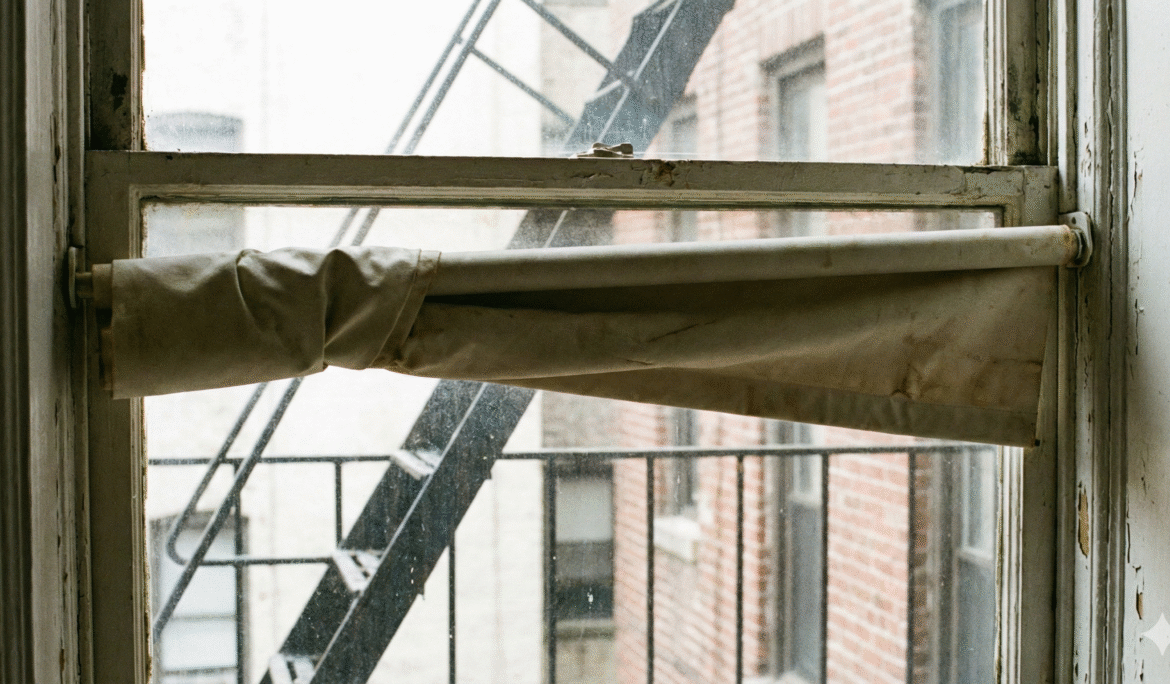
When a shade refuses to lift or drops immediately, the most common cause is lost spring tension inside the roller or headrail. This happens gradually through daily use, especially in apartments where shades are pulled at an angle due to off-level windows.
DIY fix
Lower the shade fully, then gently roll it up by hand several times to re-engage the spring. Reinstall and test with slow, even pulls.
Professional boundary
If the shade uses a sealed cassette or continues to slip after two resets, the internal spring is worn and replacement is required.
Roller Shades Rolling Unevenly
Uneven rolling almost always points to a crooked window frame, not a defective shade. This is extremely common in pre-war NYC apartments.
DIY fix
Lower the shade completely. On the side that rolls faster, gently pull the fabric outward and roll it back up evenly by hand. This redistributes fabric tension across the roller.
Professional boundary
If the fabric has visible creases, edge fraying, or repeated telescoping, continued DIY fixes will shorten the shade’s lifespan.
Shades Getting Stuck Halfway
Shades that stop mid-way are usually affected by dust buildup, debris in the brackets, or slight bending in the roller tube caused by uneven mounting pressure.
DIY fix
Remove the shade, wipe the roller and brackets with a dry microfiber cloth, then reinstall carefully while keeping the shade level.
Professional boundary
If the shade sticks at the exact same height every time, the internal mechanism is damaged.
Corded Shades With Pull Issues
Corded shades often fail due to twisted cords or uneven wear caused by angled pulling, common in narrow NYC window recesses.
DIY fix
Lower the shade fully and gently untwist the cord by hand. Pull straight down during testing to avoid re-twisting.
Professional boundary
If the cord feels rough, fuzzy, or slips internally, it is unsafe to continue using.
Cellular Shades Sagging or Sitting Unevenly
Cellular shades rely on balanced mounting pressure. In apartments with plaster walls or uneven trim, even a few millimeters of imbalance can cause sagging.
DIY fix
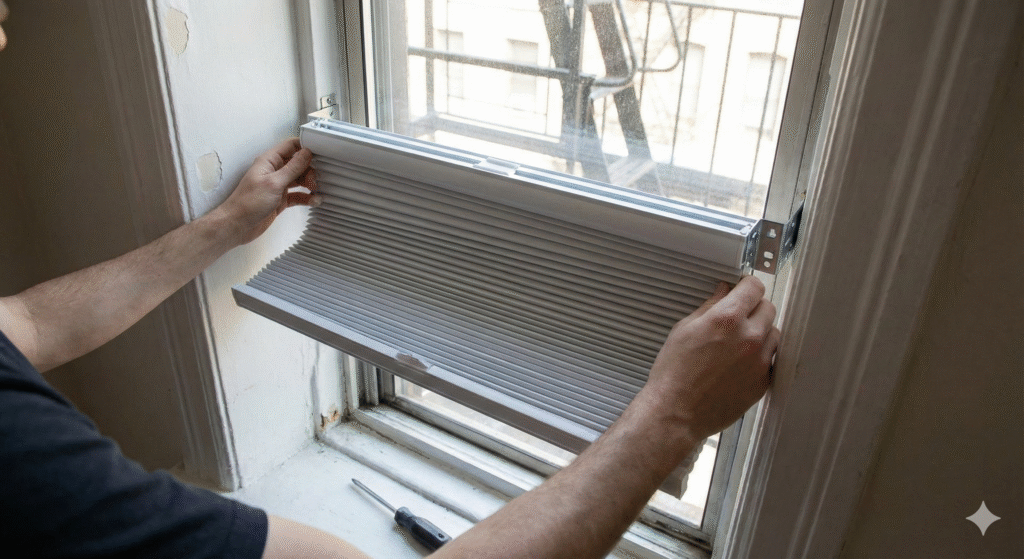
Remove the shade and reseat it carefully, ensuring both brackets are fully engaged and level.
Professional boundary
Collapsed cells or visible fabric distortion cannot be repaired without replacing the shade.
Motorized Shades Not Responding
Basic motorized shade issues are often power-related, not mechanical.
DIY checks
Replace batteries, confirm the outlet has power, and re-pair the remote according to the manufacturer’s instructions.
Professional boundary
If the motor hums without movement or fails to respond after re-pairing, servicing is required. NYC building wiring and smart-home interference can complicate DIY fixes.
Light Gaps Caused by Crooked Frames
Light leakage along shade edges is rarely a shade defect. It is usually caused by non-square window frames or shallow mounting depth.
DIY mitigation
Adjust mounting brackets slightly inward if allowed, or use side-channel accessories where possible.
Professional boundary
Permanent solutions often require custom measurements and specialty hardware designed for NYC window geometry.
What You Should Not Attempt in a Rental Apartment?
Many NYC leases prohibit drilling into window frames or modifying walls without approval. Avoid forcing brackets, cutting fabric, or opening sealed headrails. These actions can void warranties and create lease issues.
When DIY Stops and Professional Help Makes Sense?
If the issue involves sealed mechanisms, motorized components, fabric damage, or repeated failure after adjustment, professional window treatment service saves money long-term. Proper measuring, leveling, and hardware selection are especially important in NYC apartments where structural variance is the norm.