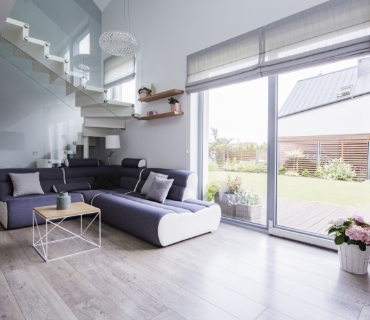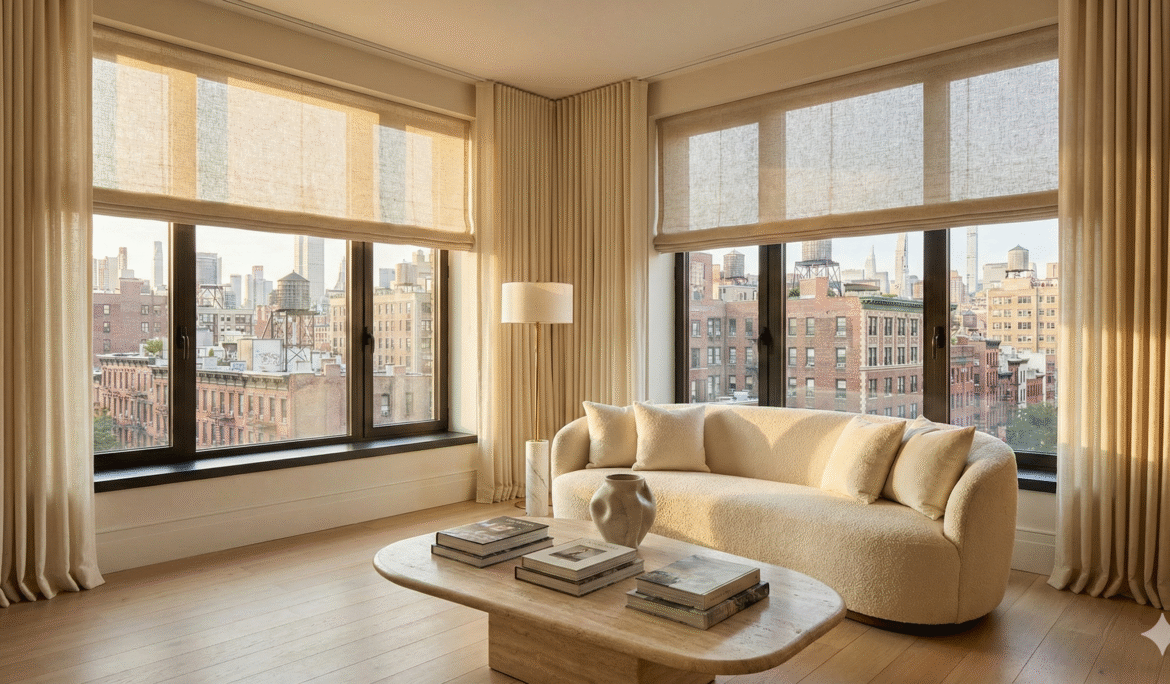
Interior designers layer shades and drapes in NYC homes to control light, privacy, insulation, and aesthetics simultaneously. Shades provide functional light control and privacy, while drapes add softness, depth, and visual framing. In New York apartments with varied window sizes and intense daylight exposure, layering creates flexibility without sacrificing style or space efficiency.
Why Designers Layer Window Treatments in NYC?
Layering window treatments is common in New York City homes because a single solution rarely meets all needs. Apartments face strong daylight, close neighboring buildings, and limited wall depth. Designers solve this by pairing functional shades with decorative drapes, allowing residents to fine-tune light, privacy, and ambiance throughout the day without cluttering the space.
The Base Layer: Shades for Light Control and Privacy
Shades form the foundation of layered window treatments. Designers typically choose roller, solar, or cellular shades because they sit close to the window and handle daily functionality.
How designers choose shades
- Roller shades for clean, modern apartments
- Solar shades for south-facing or high-rise windows
- Cellular shades for insulation and noise reduction
Shades are usually mounted inside the window frame to preserve clean lines and keep the room visually open.
The Top Layer: Drapes for Depth and Design
Drapes add architectural weight and softness that shades alone cannot provide. Designers use drapes to frame windows, add color or texture, and visually raise ceiling height.
Common drapery choices
- Full-length panels to elongate walls
- Ripple-fold or pinch-pleat styles for structured elegance
- Lined or interlined fabrics for light blocking and insulation
In NYC homes, drapes are often mounted close to the ceiling to maximize perceived height.
How Designers Decide the Order of Layers?
The functional rule is simple. Shades operate daily. Drapes operate situationally.
Shades manage sunlight, glare, and privacy during working hours. Drapes are closed in the evening, during sleep, or when a finished, styled look is desired. Designers plan hardware and spacing so both layers operate independently without friction.
Layering for Different NYC Apartment Types
Pre-War Apartments
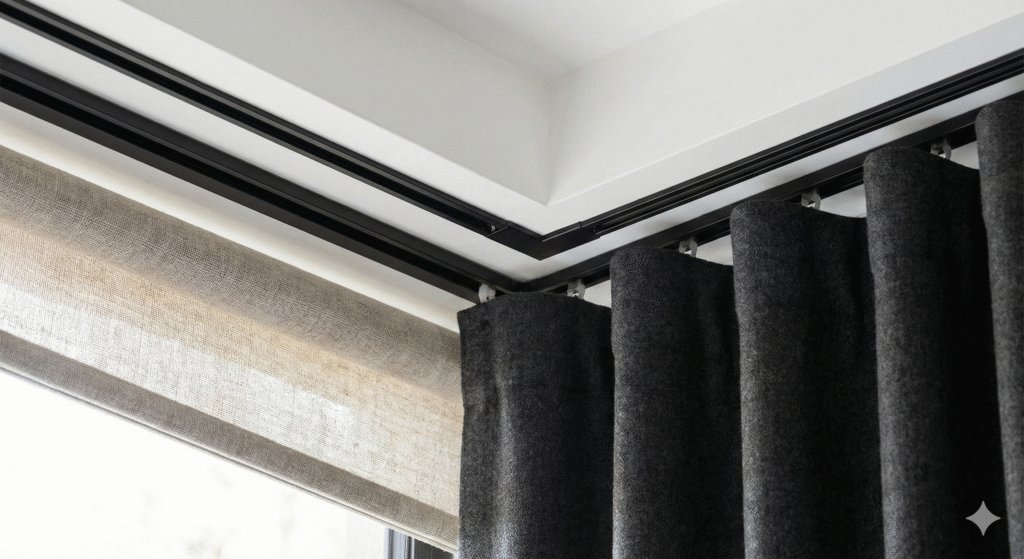
Pre-war homes often have deep window recesses and decorative trim. Designers use inside-mounted shades paired with ceiling-mounted drapery tracks to avoid drilling into original woodwork.
Modern High-Rise Apartments
High-rises benefit from minimal roller or solar shades combined with floor-to-ceiling drapes to soften expansive glass walls and reduce glare.
Small NYC Bedrooms
In compact bedrooms, designers favor blackout roller shades layered with lightweight drapes to save space while achieving darkness and warmth.
Fabric and Color Pairing Strategies Designers Use
Interior designers rarely match shades and drapes exactly. Instead, they create contrast while staying within a tight palette.
Typical pairing logic
- Neutral shades with textured or colored drapes
- Light-filtering shades with heavier drapery fabrics
- Matte shade finishes paired with soft, flowing textiles
This approach keeps windows visually interesting without overpowering the room.
Hardware Choices That Make Layering Work
Layered treatments require precise hardware planning. Designers often use:
- Dual-track systems for smooth operation
- Ceiling-mounted tracks in apartments with limited wall space
- Motorized shades combined with manual drapery for flexibility
Poor hardware spacing is one of the main reasons layered treatments fail visually or mechanically.
Motorized Shades and Drapes in Layered Designs
Motorized shades are increasingly common in NYC homes, especially in large windows or hard-to-reach areas. Designers often automate the shade layer while keeping drapes manual for styling control.
This setup allows daytime automation for light management and evening manual adjustment for ambiance.
Common Mistakes Designers Avoid
Designers avoid treating shades and drapes as decorative duplicates. They also avoid bulky fabrics in small rooms and incorrect mounting heights that shorten window appearance. Precision measurement is critical in NYC apartments where walls and ceilings are rarely perfectly square.
When Professional Installation Matters
Layered window treatments demand accurate measuring, leveling, and hardware placement. In NYC homes, even small alignment errors can cause light gaps, uneven drapes, or operational issues. Professional installation ensures both layers function independently and look intentional.
FAQs
Do interior designers recommend layering shades and drapes?
Yes. Interior designers layer shades and drapes because shades handle daily light control and privacy, while drapes add insulation, softness, and visual framing. This combination offers flexibility that a single window treatment cannot provide.
What type of shades work best under drapes?
Roller shades, solar shades, and cellular shades work best under drapes because they sit close to the window frame. These shades provide light control without adding bulk, making them ideal for layered designs.
Is layering window treatments suitable for small NYC apartments?
Yes. Designers often layer slim roller or blackout shades with lightweight drapes in small NYC apartments. This approach saves space while improving privacy, light control, and overall room aesthetics.
Should shades or drapes be installed first?
Shades should be installed first. Designers treat shades as the functional base layer and drapes as the decorative top layer. This order ensures smooth operation and prevents hardware interference.
Can motorized shades be layered with drapes?
Yes. Motorized shades are commonly layered with manual drapes in NYC homes. Designers automate the shade for daily light control while keeping drapes manual for styling and flexibility.
When is professional installation recommended for layered window treatments?
Professional installation is recommended when layering shades and drapes because accurate measuring, mounting height, and hardware spacing are critical. In NYC homes, uneven walls and ceilings make DIY installation risky.