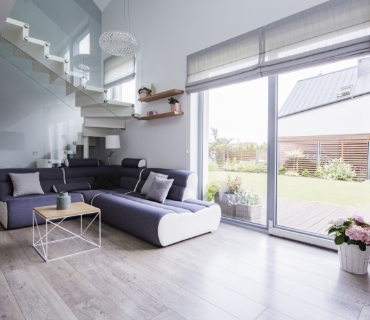
Motorized shades transform high-rise NYC living rooms by solving the core challenges of sunlight, glare, privacy, temperature control, and smart-home convenience. The right choice depends on your window direction, fabric openness, motor type, and integration needs. This guide breaks down every factor clearly so you can select shades that fit your view, lifestyle, and apartment layout.
What sunlight challenges do high-rise NYC living rooms face?
High-rise living rooms receive stronger direct sunlight because of unblocked exposure. This results in glare, heat buildup, fading furniture, and washed-out screens. Proper motorized shades help balance natural light while protecting interiors.
South- and west-facing apartments in Manhattan, LIC, FiDi, and Midtown see aggressive afternoon sun. Floor-to-ceiling windows amplify heat load and brightness. Solar fabrics with 1–5 percent openness and UV-blocking coatings significantly reduce discomfort while preserving the skyline view.
Which shade fabrics work best for high-rise living rooms?
Solar, blackout, light-filtering, and dual fabrics each serve different needs. Solar shades reduce glare while keeping your view, blackout blocks all light, and dual shades offer both functions in one system.
Solar Shades
Best for preserving skyline views while reducing glare.
Choose 1–3 percent openness for strong sun and 5 percent for softer light.
Blackout Shades
Ideal for cinematic evenings or west-facing living rooms.
Light-Filtering Shades
Great for soft, even daylight in minimalist interiors.
Dual Shades
Two fabrics on one motor, solar for day, blackout for night—perfect for FiDi and Midtown skyscrapers.

What openness percentage is best for NYC high-rise windows?
Most high-rise living rooms need 1–5 percent openness depending on sun direction and view preferences.
| Openness | Best For | Why It Works |
|---|---|---|
| 1% | Harsh sun, TV glare | Maximum glare control |
| 3% | Most NYC high-rises | Balanced light + privacy |
| 5% | View lovers | Best skyline visibility |
| 10% | North-facing | Soft light, minimal glare |
How important is privacy in high-rise apartments?
High-rise towers often face each other. Choose solar shades with 1–3% openness for daytime privacy, and blackout or dual shades for full nighttime privacy.
In areas like Midtown West, Tribeca, and LIC, nearby luxury towers overlook each other. Motorized dual shades solve privacy concerns elegantly by automating day/night transitions.
What motor type should you choose for high-rise window sizes?
Battery motors work for most apartments, while large, heavy shades or full-height windows benefit from hardwired or ultra-quiet premium motors.
Battery-Powered Motors
Rechargeable and ideal for renters. Silent and reliable.
Hardwired Motors
Best for renovations. Powerful enough for oversized glass panels.
Ultra-Quiet Premium Motors
For open-concept living rooms where sound matters.
Brands often integrate with Lutron for seamless automation.

How should motorized shades integrate with your smart home?
Choose shades that pair with Alexa, Google Home, Apple HomeKit, or Lutron. Automations such as schedules, sunrise/sunset modes, and one-tap controls enhance convenience.
Luxury condos increasingly use Lutron systems. Battery motors often support standard smart integrations, letting you control shades remotely from work or automate weekly routines.
Are motorized shades helpful for glare reduction?
Yes. Solar fabrics with 1–3% openness reduce glare dramatically without darkening the room.
Glare is a major issue in high-rise NYC apartments due to reflective buildings and direct sun. Solar shades keep natural brightness while preventing reflections on TVs, laptops, and glossy interiors.
How do heat and UV affect your fabric choice?
Choose UV-coated solar shades for heat-heavy apartments. They reduce thermal gain, protect furniture, and improve comfort.
NYC summers intensify thermal load through large windows. Solar fabrics reduce heat by blocking UV radiation, and dual shades offer evening temperature control.
Do high-rise windows require special measurements?
Yes. High-rise windows often have uneven frames, concrete edges, and deep pockets. Professional measurement ensures perfect alignment.
Luxury buildings often have non-standard casing depths. Custom measurement prevents scraping, crooked rolls, and gaps that allow light leakage.
How much do motorized shades cost in NYC?
Expect to pay 450$–850$ per window for standard motorized rollers, with premium and dual systems reaching 1,200$–3,000$.
Cost varies based on fabric type, motor strength, smart integration, and installation complexity.
Originality Asset: High-Rise Motorized Shade Quick Checklist
Use this checklist while choosing shades:
- Identify window direction
- Choose fabric (solar / blackout / dual)
- Select openness percentage (1–5%)
- Pick the motor type
- Confirm smart-home compatibility
- Measure depth + width differences
- Check privacy needs
- Set automation routines
FAQs
1. Do motorized shades work with floor-to-ceiling high-rise windows?
Yes. Hardwired or strong premium motors are ideal for tall or heavy shades.
2. Will solar shades block my skyline view?
No. Solar shades maintain view clarity depending on openness level (1–5%).
3. Are battery-powered motors reliable for NYC apartments?
Absolutely. They work flawlessly for standard-size windows and last months per charge.
4. Do I need blackout in the living room?
If you want privacy at night or cinematic evenings, yes.
5. Which shades reduce afternoon glare the most?
Solar shades with 1–3% openness deliver the best glare control.