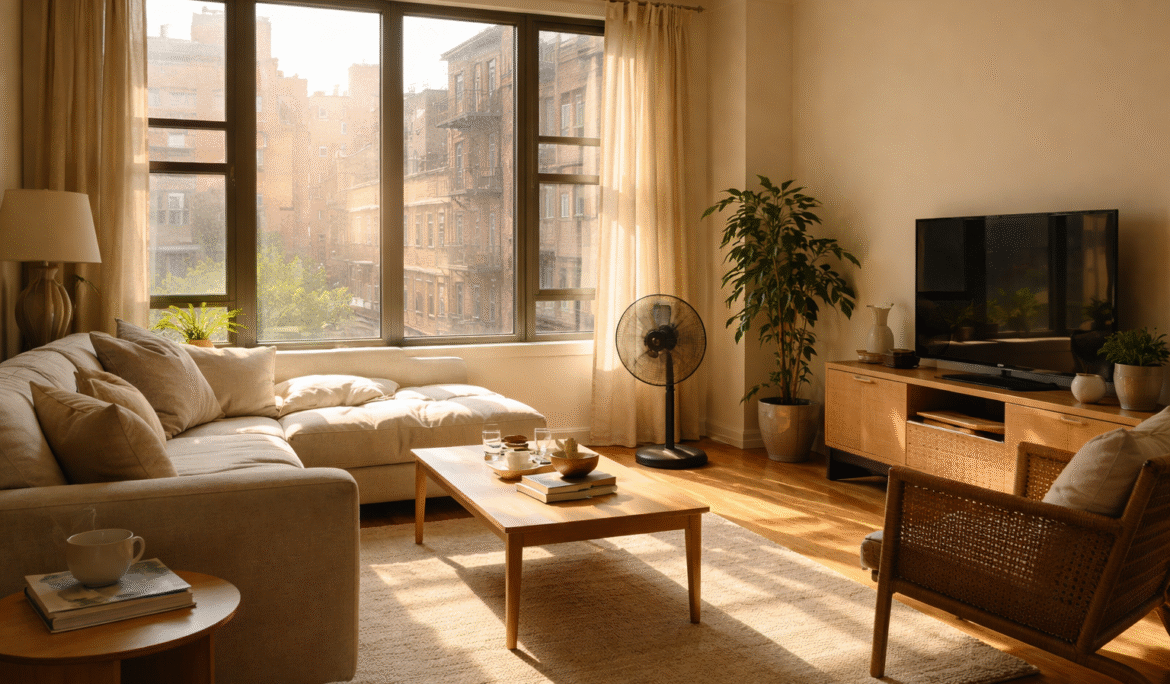
New York apartments overheat in late summer because lower sun angles allow direct sunlight to penetrate deeper through windows, especially in south- and west-facing units. Older buildings with large glass areas trap solar heat during afternoon hours, causing indoor temperatures to rise even when outdoor temperatures drop. Properly selected window shades reduce heat gain by blocking, reflecting, or diffusing sunlight before it enters the room.
Why Late Summer Heat Feels Worse Inside NYC Apartments?
Late summer heat in New York apartments feels more intense because the sun sits lower in the sky, allowing direct sunlight to enter windows for longer periods during the afternoon and early evening.
Unlike mid-summer, when the sun is higher and more easily blocked by overhangs or neighboring buildings, August and early September sunlight strikes windows at sharper angles. This effect is strongest in south-facing and west-facing apartments, where glass surfaces absorb and trap heat inside living spaces.
Many NYC buildings, especially pre-war and mid-century structures, were not designed with modern heat control in mind. Large windows, limited insulation, and sealed layouts cause solar heat to accumulate faster than air conditioning systems can remove it.
How Solar Heat Gain Works in Apartment Buildings?
Solar heat gain occurs when sunlight passes through window glass and converts into heat energy inside the room.
Once sunlight enters an apartment, it warms floors, furniture, and walls. These surfaces then slowly release heat back into the air, keeping rooms warm well into the evening. This is why apartments can remain hot even after sunset.
Standard window glass allows a high percentage of solar radiation to pass through. Without shading or reflective control, the heat remains trapped indoors, increasing cooling demand and electricity usage.
Why Curtains and Blinds Often Fail to Stop Apartments from Overheating?
Traditional curtains and blinds reduce glare but rarely stop heat effectively because they absorb sunlight after it has already entered the room.
Fabric curtains trap heat between the window and the room, while standard horizontal blinds leave gaps that allow sunlight to pass through. In both cases, the heat has already crossed the glass barrier, making cooling less efficient.
This is why many New York residents notice that closing curtains darkens the room but does not significantly reduce indoor temperature during peak afternoon hours.
How Window Shades Reduce Heat Before It Enters the Room?
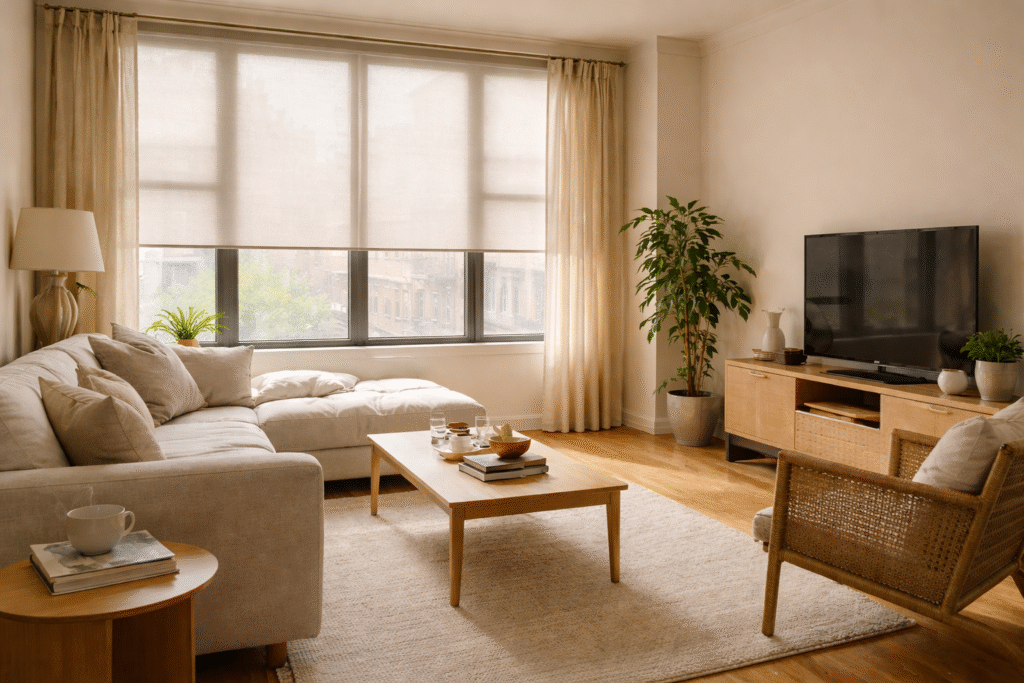
Window shades reduce apartment overheating by blocking or reflecting sunlight at the window surface, preventing heat from entering the living space.
Solar shades, light-filtering shades, and reflective fabrics are designed to intercept sunlight before it warms interior surfaces. By stopping heat at the glass, these shades reduce indoor temperature buildup and ease the load on air conditioning systems.
Motorized and properly fitted shades provide consistent coverage throughout the day, adapting to changing sun angles that are common in late summer.
Which Apartments Are Most Affected in New York?
Apartments with the following characteristics experience the highest late-summer heat buildup:
- West-facing windows exposed to afternoon sun
- South-facing windows with unobstructed sky views
- High-rise units with large glass surfaces
- Top-floor apartments with limited ventilation
- Pre-war or older buildings with minimal insulation
These conditions are common in Manhattan, Brooklyn, and Queens, especially in dense residential neighborhoods with tall buildings and wide window spans.
How Heat-Reducing Shades Improve Comfort and Energy Use?
Heat-reducing window shades help stabilize indoor temperatures by limiting solar heat gain during peak sunlight hours.
By reducing heat buildup, apartments cool faster in the evening and require less air conditioning during the day. This leads to lower electricity usage and more consistent indoor comfort without permanently darkening the space.
Many New York residents notice improved comfort in living rooms and bedrooms that previously became unusable during late afternoon hours.
When Window Shades Make More Sense Than AC Adjustments?
Adjusting air conditioning settings alone does not solve the root cause of apartment overheating because it treats symptoms rather than the source of heat.
When sunlight is allowed to enter freely, cooling systems must work harder and longer to maintain the temperature. Window shades address the problem at its origin by reducing heat entry before cooling is needed.
This approach is especially practical in apartments where window upgrades or structural changes are not possible.
Takeaway for New York Residents
Late summer overheating in New York apartments is primarily caused by solar heat gain through windows, not outdoor temperature alone. Window shades offer a practical, non-invasive way to reduce indoor heat, improve comfort, and limit cooling costs during peak sunlight hours.
Frequently Asked Questions
Do window shades really reduce apartment heat?
Yes. Window shades reduce heat by blocking or reflecting sunlight before it enters the room, lowering indoor temperature buildup.
Are shades better than blackout curtains for heat control?
Yes. Heat-control shades work at the window surface, while blackout curtains absorb heat after it enters the room.
Do renters benefit from window shades?
Yes. Window shades are non-permanent solutions that work well in rental apartments without requiring structural changes.