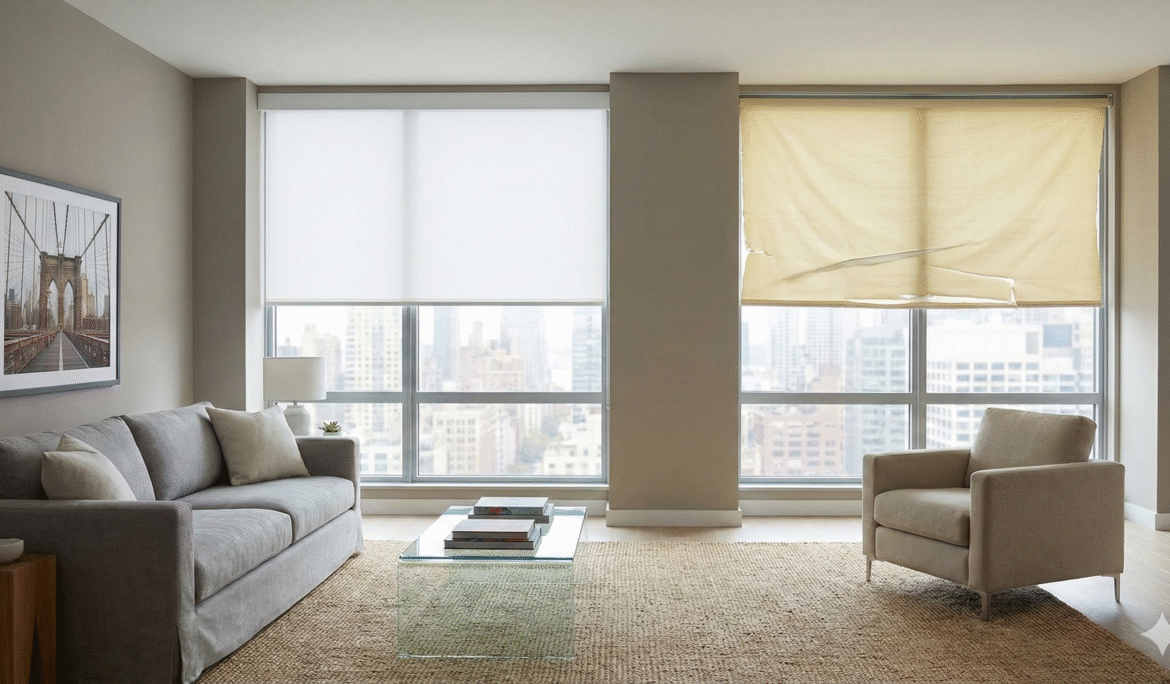
Window shades in NYC typically need replacement every 7-10 years for manual shades and 5-8 years for motorized shades, depending on sun exposure, material quality, and daily usage. South-facing windows, high-rise UV exposure, humidity, and frequent operation shorten lifespan. Fabric fraying, loss of light control, motor delays, and outdated insulation performance are clear replacement signals. In many NYC apartments, replacing shades is more cost-effective than repairing them once performance drops below comfort or energy-efficiency standards.
Why Window Shades Wear Out Faster in NYC?
Window shades in New York City experience harsher conditions than in most U.S. cities due to UV intensity, vertical exposure, pollution, and constant daily use.
High-rise apartments receive prolonged direct sunlight, especially in south- and west-facing units. UV radiation degrades fabrics, weakens internal lift systems, and causes discoloration within a few years. City dust and airborne particles settle into shade fabrics and mechanisms, accelerating wear. Frequent raising and lowering, common in apartments with limited natural airflow, stresses cords, clutches, and motors.
These factors mean manufacturer lifespan estimates often assume ideal conditions that do not reflect NYC living environments.
Average Lifespan of Common Window Shade Types
Different shade types age at different rates based on construction and usage patterns.
Roller shades typically last 7-10 years when made with high-quality solar or blackout fabrics. Budget fabrics often fail closer to 5 years.
Cellular or honeycomb shades last 8-12 years, but only when internal cells remain intact. NYC humidity can collapse cells earlier.
Roman shades average 6-8 years due to stitched folds, fabric weight, and cord strain.
Motorized shades generally last 5-8 years for motors and 7-10 years for fabrics, depending on motor brand and voltage stability.
The weakest component usually determines replacement timing, not the shade as a whole.
Signs Your Window Shades Need Replacement, Not Repair
Some issues justify repair. Others signal full replacement.
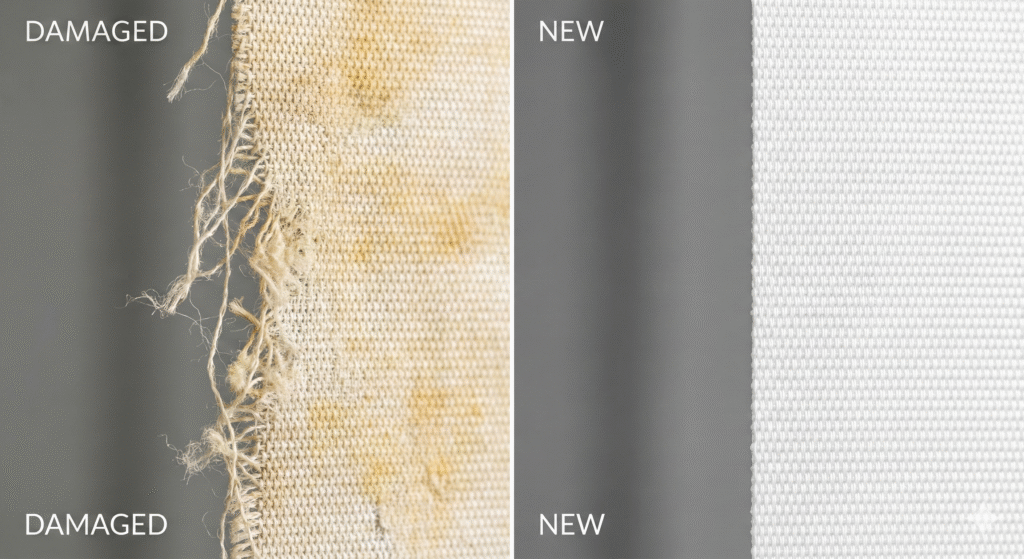
Fabric-related failures include permanent fading, fraying edges, creasing that no longer relaxes, and loss of opacity in blackout shades. These cannot be repaired effectively.
Mechanical failures include uneven lifting, slipping rollers, cords that bind, or motors that hesitate or stop mid-cycle. In NYC, repair costs often reach 40-60% of replacement cost, making replacement the more rational choice.
If a shade no longer blocks heat, glare, or light effectively, it has failed its primary function, regardless of appearance.
How Sun Exposure Changes Replacement Timing in NYC Apartments?
Sun exposure is the single biggest lifespan variable.
South-facing windows experience the fastest degradation, often requiring replacement 2-3 years earlier than north-facing windows.
Corner units receive angled UV exposure that weakens fabrics unevenly.
High-floor apartments receive stronger, less filtered sunlight, accelerating fabric breakdown.
NYC buildings without exterior shading or recessed windows intensify this effect. Shades installed primarily for heat control often lose thermal performance before visible damage appears.
Motorized Shades: Replace or Upgrade?
Motorized shades require a different evaluation.
If the motor is outdated, noisy, slow, or incompatible with modern smart-home systems, replacement is usually better than repair. Older motors lack torque efficiency and consume more power. Newer motors offer quieter operation, better battery life, and integration with Alexa, Google Home, and Lutron systems.
In NYC apartments, where rewiring is disruptive, upgrading to wireless or battery-powered motors during replacement reduces installation complexity and long-term maintenance.
Energy Efficiency and Insulation Degradation
Window shades contribute directly to thermal comfort.
Over time, cellular shades lose trapped air pockets, reducing insulation by up to 30%. Solar shades lose reflective coatings, allowing more heat gain. Blackout fabrics thin with UV exposure, increasing light bleed.
In NYC, where heating and cooling costs are high, outdated shades increase energy use measurably. Replacing old shades often improves comfort more than adjusting HVAC settings.
NYC Rental vs Condo vs Townhouse Considerations
Replacement timing varies by property type.
In rental apartments, cosmetic wear and malfunctioning hardware usually justify replacement once usability drops, especially before lease renewals.
In condos, owners often replace shades during renovations or smart-home upgrades, even if shades still function.
In townhouses, larger window spans and custom sizes mean shades are often replaced less frequently but at a higher individual cost.
Building rules, landmark restrictions, and HOA guidelines also affect replacement decisions in NYC.
Replace vs Repair: Cost Logic for NYC Homeowners
As a rule of thumb:
If repair costs exceed 35-40% of replacement cost, replacement is the better long-term decision. Labor rates in NYC make frequent repairs inefficient, especially for older shade systems.
Replacement also resets warranties, improves energy performance, and modernizes appearance, which matters for resale value and rental appeal.
Recommended Replacement Timeline Summary
- Manual roller or solar shades: 7-10 years
- Cellular shades: 8-12 years, sooner with humidity damage
- Roman shades: 6-8 years
- Motorized shades: 5-8 years for motors, 7-10 years for fabrics
- South-facing or high-rise units: subtract 2-3 years from averages
These ranges assume professional-grade materials, not budget retail shades.
When Replacement Is Strongly Recommended
Replacement should not be delayed if:
- Shades no longer control light or heat
- Motors stall or respond inconsistently
- Fabrics show structural damage
- Insulation performance has dropped
- A renovation or smart-home upgrade is planned
Delaying replacement often increases energy costs and reduces daily comfort.
FAQs
How long do window shades last in NYC?
Most window shades in NYC last between 7 and 10 years, but high-rise sun exposure and daily use often shorten this range by several years.
Do motorized shades wear out faster?
Motorized shades often require replacement sooner due to motor lifespan limits, even when the fabric remains usable.
Is it better to repair or replace old shades?
Replacement is usually better when repair costs exceed 40% of replacement, which is common in NYC due to labor costs.
Does sun exposure really matter?
South and west-facing NYC windows experience faster UV degradation, reducing shade lifespan by up to 30%.