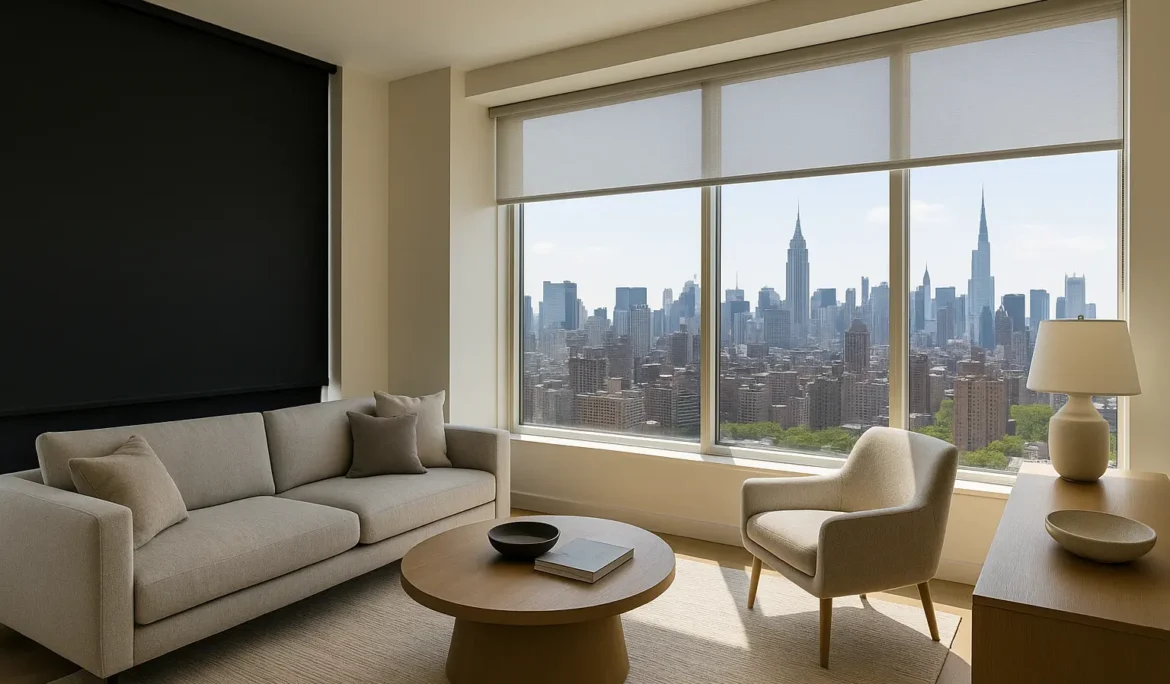
For NYC apartments facing direct sunlight, blackout shades block nearly all light for better sleep, solar shades reduce glare and heat while preserving skyline views, and sheer shades soften daylight with elegance. The right choice depends on whether your priority is darkness, UV protection, energy savings, or style.
The Sunlight Challenge in NYC Apartments
Living in New York City comes with unique perks, skyline views, vibrant neighborhoods, and large windows in many modern apartments. Yet those same windows often face intense direct sunlight, especially in south or west-facing units. Residents in Manhattan high-rises struggle with glare reflecting off glass towers, while Brooklyn brownstone residents face overheated living rooms and a lack of privacy at street level. Without the right window treatments, these issues lead to higher cooling bills, faded furniture, and restless sleep.
This is why choosing between blackout, solar, and sheer shades isn’t just about design, it’s about comfort, energy efficiency, and adapting to NYC’s urban lifestyle.
Blackout Shades: Darkness and Insulation for Restful Sleep
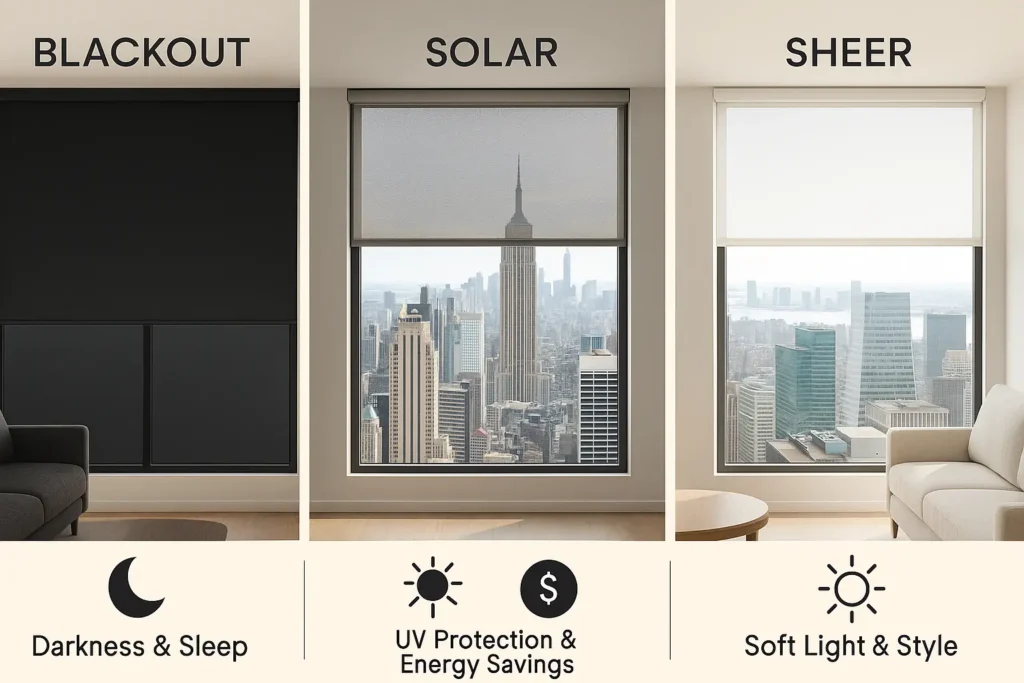
Blackout shades are engineered to block 95-100% of light. For apartments in Midtown or the Lower East Side where neon signs, traffic lights, and early sunrises disturb rest, these shades provide true darkness.
But their benefits go beyond sleep. By adding an insulating layer against the glass, blackout fabrics help stabilize room temperature, lowering air-conditioning costs in summer and retaining warmth in winter. Many NYC parents also install them in nurseries to create consistent nap environments.
Unlike standard blinds, custom blackout shades from Professional Shades can be tailored to fit tricky NYC windows, including oversized loft frames or narrow brownstone casements. Homeowners often pair them with decorative drapery for added texture while still enjoying their full light-blocking performance.
Solar Shades: UV Protection Without Losing the View
Solar shades are designed with a woven fabric that filters sunlight rather than eliminating it. They’re especially popular in apartments with floor-to-ceiling windows, where blocking the view defeats the purpose of living in Manhattan.
These shades reduce glare during the day, making them ideal for remote workers setting up offices near bright windows. They block up to 99% of UV rays, protecting hardwood floors, rugs, and artwork from fading. More importantly, they help lower cooling bills, a crucial advantage during long NYC heat waves.
Solar shades can also be combined with motorized controls for convenience, a feature showcased in motorized window treatments. With the push of a button or an app, residents can adjust shades throughout the day as the sun shifts across the skyline.
Sheer Shades: Soft Light and Daytime Privacy
Sheer shades are perfect for apartments where style and natural light are priorities. They diffuse sunlight into a soft glow, creating bright interiors without the harshness of direct rays. In Brooklyn apartments with street-facing windows, they add privacy during the day while still letting daylight in.
At night, however, sheer fabrics reveal interiors when lights are on. For this reason, many NYC residents layer sheer shades with drapes or blackout curtains for 24-hour coverage. This flexibility allows living rooms to remain bright and airy during the day but fully private when evening comes.
Which Shade Works Best for Your NYC Apartment?
The right choice depends on the specific challenges of your space:
- Bedrooms near busy streets → blackout shades provide uninterrupted sleep.
- Living rooms with skyline views → solar shades cut glare but maintain visibility.
- Street-level apartments → sheer shades soften daylight while preserving daytime privacy.
- Mixed-use spaces → layering solar or sheer shades with drapery creates adaptable comfort.
NYC apartments are rarely one-size-fits-all, so many residents choose layered window treatments. For example, pairing solar shades with blackout drapery provides flexibility with sunlight by day, complete darkness at night.
To find the right match, many clients schedule a free in-home consultation in NYC where design experts measure windows and recommend solutions based on direction, exposure, and lifestyle.
Comparison: Blackout vs Solar vs Sheer Shades
| Feature | Blackout Shades | Solar Shades | Sheer Shades |
|---|---|---|---|
| Light Control | 95–100% darkness | Reduces glare, keeps views | Softly diffuses daylight |
| UV Protection | High | Very high (up to 99%) | Moderate |
| Heat Reduction | Strong insulation | Strong (cuts heat gain) | Low |
| Privacy | Excellent (day & night) | Moderate (varies by openness) | Daytime only |
| Best For | Bedrooms, nurseries | Living rooms, high-rises | Style-focused spaces |
Beyond the Basics: Energy Efficiency in Manhattan
While blackout, solar, and sheer shades dominate most choices, energy efficiency is becoming a priority for NYC residents. Rising utility costs and sustainability concerns push many homeowners toward energy-efficient shades, such as cellular or honeycomb designs.
Layering energy-efficient options with blackout or solar fabrics maximizes insulation, helping apartments stay cool during August heat waves and warm in January cold spells. For landlords, upgrading to custom energy-saving shades can even increase property value and tenant satisfaction.
FAQs
Do blackout shades keep apartments cooler in summer?
Yes. Blackout fabrics add insulation that reduces heat transfer, keeping apartments cooler during NYC’s hottest months.
Can solar shades provide privacy?
Solar shades provide daytime privacy, but at night, with lights on, they may allow visibility. Many residents combine them with drapery for complete coverage.
Are sheer shades practical for street-level apartments?
Yes, during the day. For night-time privacy, pair with blackout curtains or layered treatments.
Which shades are most energy-efficient?
Cellular shades lead in insulation, but blackout and solar shades also improve efficiency when properly fitted to NYC windows.
Can blackout and solar shades be motorized?
Absolutely. Motorized shades add convenience and modern control, especially for tall or hard-to-reach windows.